
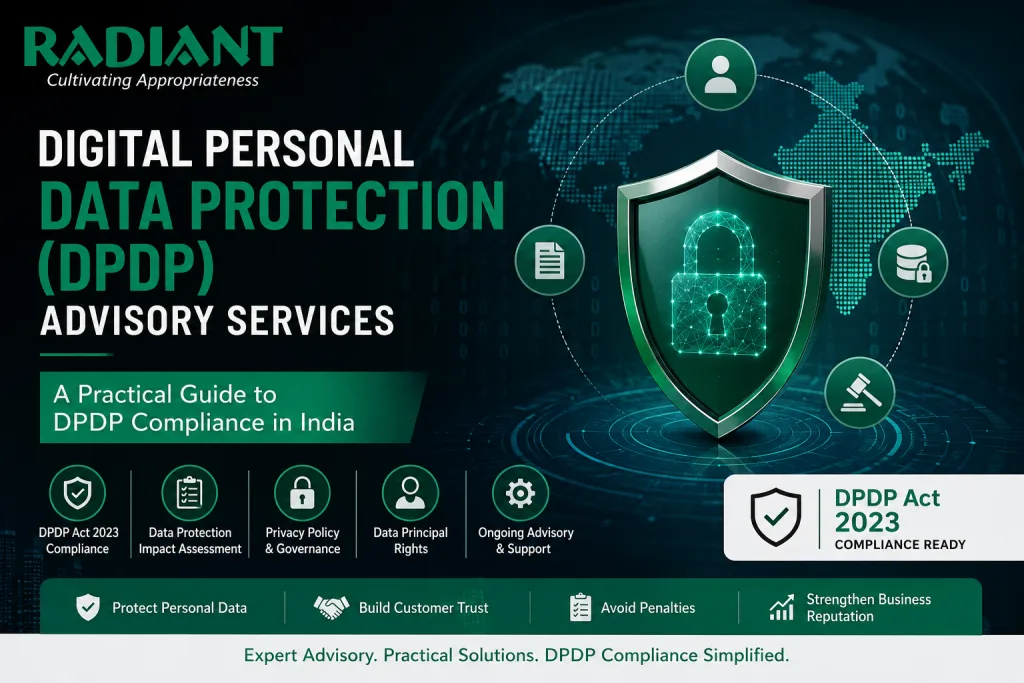
As organizations increasingly depend on digital platforms, cloud applications, enterprise systems, customer databases and online services, the volume of personal data being collected and processed has grown significantly. Businesses need to understand not only where personal data is stored, but also how it is collected, processed, shared, secured and retained.
India’s Digital Personal Data Protection Act, 2023 (DPDP Act) establishes a legal framework for processing digital personal data while recognising individuals’ rights over their personal data and the legitimate need of organizations to process data for lawful purposes.
With the Digital Personal Data Protection Rules, 2025 notified by the Ministry of Electronics and Information Technology (MeitY), organizations now have a more detailed framework for operationalising their data protection responsibilities. The Rules include requirements around notices, consent, security safeguards and other compliance mechanisms, with a phased implementation timeline.
This makes DPDP Advisory Services increasingly important for enterprises, SMEs, startups and organizations that collect or process digital personal data.
Radiant Info Solutions Pvt. Ltd. provides DPDP Compliance Services, DPDP Advisory Services, Data Privacy Consulting and DPDP implementation support to help organizations understand their obligations, identify compliance gaps and develop a practical roadmap for strengthening their data protection framework.
What Are DPDP Advisory Services?
Digital Personal Data Protection Advisory Services help organizations assess their existing personal data practices and align their processes, policies, technology controls and governance mechanisms with applicable DPDP requirements.
DPDP compliance is not simply about creating a privacy policy. It can involve multiple business and technology functions, including:
- Personal data discovery
- Data inventory and classification
- Data mapping
- Data processing assessment
- Consent management
- Privacy notices
- Data retention and deletion
- Data Principal rights
- Data security safeguards
- Data breach response
- Third-party and vendor assessment
- Governance and accountability
- Compliance documentation
- Employee awareness and training
A structured DPDP Compliance Consulting approach can help organizations establish a coordinated data protection program instead of addressing privacy requirements individually.
Why DPDP Compliance Matters for Businesses
Personal data can exist across websites, mobile applications, CRM systems, HR platforms, ERP applications, cloud environments, email systems, databases, analytics platforms and third-party applications.
Without proper visibility, organizations may not know:
- What personal data they hold
- Why the data was collected
- Where the data is stored
- Who can access it
- Which third parties receive it
- How long it is retained
- Whether appropriate security controls are implemented
- How individuals can exercise applicable rights
- What happens when data is no longer required
The DPDP framework therefore requires organizations to look at privacy from both a governance and technology perspective.
This is where a professional DPDP Compliance Consultant can provide valuable assistance.
DPDP Act 2023 and the 2025 Rules
The Digital Personal Data Protection Act, 2023 was enacted on 11 August 2023. The Act addresses the processing of digital personal data and establishes concepts including Data Principals, Data Fiduciaries, personal data processing, consent and obligations relating to protection of personal data.
The Government subsequently notified the Digital Personal Data Protection Rules, 2025 on 13 November 2025. The Rules provide detailed requirements and a phased commencement structure.
For example, the Rules require notices provided by Data Fiduciaries to Data Principals to be understandable independently and to clearly communicate relevant information, including an itemised description of personal data and the purpose of processing.
Consequently, organizations should move beyond simply understanding the Act and begin evaluating their actual operational readiness.
What Does DPDP Compliance Involve?
A successful DPDP program should connect legal requirements with business processes and technology controls.
- DPDP Readiness Assessment
The first step is understanding the organization’s current state.
A DPDP Readiness Assessment evaluates existing privacy practices, policies, data processing activities, security controls and governance processes.
Radiant can help organizations identify areas that require attention and establish a practical compliance roadmap.
- DPDP Gap Assessment
A DPDP Gap Assessment compares existing organizational practices against applicable requirements.
The assessment can identify gaps involving:
- Data collection
- Consent
- Privacy notices
- Data processing
- Data retention
- Data security
- Data sharing
- Third-party access
- Data Principal rights
- Incident management
- Documentation
- Governance
The outcome can be used to prioritize remediation activities.
- Personal Data Discovery and Data Mapping
Organizations cannot effectively protect information they cannot identify.
DPDP Data Mapping Services help create visibility into the flow of personal data across business applications and processes.
A data mapping exercise may consider:
Collection → Processing → Storage → Sharing → Retention → Deletion
This can help organizations establish a Personal Data Inventory, identify processing activities and understand how information moves between internal systems and external service providers.
- Data Privacy Risk Assessment
A Data Privacy Risk Assessment evaluates potential risks associated with personal data processing.
Radiant’s approach can consider:
- Type of personal data processed
- Purpose of processing
- Access requirements
- Data sharing
- Third-party dependencies
- Storage environments
- Retention practices
- Security controls
- Business processes
- Potential privacy risks
The objective is to help organizations prioritize controls based on their actual environment.
- Privacy Policy and Documentation
DPDP compliance also requires organizations to review their documentation and communication mechanisms.
DPDP Policy Development Services can support the development or review of relevant documentation such as:
- Privacy policies
- Privacy notices
- Data protection policies
- Data retention policies
- Consent procedures
- Data breach response procedures
- Data Principal rights procedures
- Internal data handling guidelines
- Vendor privacy requirements
Documentation should reflect actual business practices rather than functioning merely as generic templates.
- Consent Management
Consent is an important component of the DPDP framework.
Organizations may need to evaluate how consent is obtained, recorded, managed, reviewed and withdrawn.
DPDP Consent Management Consulting can help organizations assess their existing consent processes and identify opportunities for improving transparency, control and traceability.
- Data Principal Rights Management
Organizations should establish processes for handling applicable requests from Data Principals.
A DPDP advisory program can help businesses establish workflows for:
- Request intake
- Identity verification
- Request tracking
- Data access processes
- Correction-related requests
- Erasure-related requests
- Consent withdrawal
- Grievance handling
- Response monitoring
- Internal escalation
A structured Data Principal Rights Management process can improve operational consistency.
- Data Security Advisory
Privacy and cybersecurity are closely connected.
DPDP Data Security Advisory can help organizations review controls protecting personal data across infrastructure, applications, endpoints, networks, cloud environments and databases.
Depending on the organization’s environment, the assessment may consider:
- Access controls
- Authentication
- Encryption
- Logging and monitoring
- Backup controls
- Data loss prevention
- Vulnerability management
- Endpoint security
- Network security
- Incident response
The goal is to establish appropriate safeguards for personal data within the organization’s broader security architecture.
- Data Breach Response Planning
A personal data breach can create operational, regulatory and reputational risks.
Organizations should therefore have a defined process for detecting, investigating, containing and responding to incidents involving personal data.
Data Breach Management Consulting can help organizations review their existing incident response processes and establish privacy-specific workflows.
DPDP Compliance for Different Industries
DPDP requirements can affect organizations across multiple sectors because personal data is commonly used in everyday business operations.
Radiant can support DPDP compliance for enterprises, SMEs and startups, including organizations operating in:
- Banking and financial services
- Insurance
- Healthcare
- Education
- E-commerce
- Manufacturing
- IT and IT-enabled services
- SaaS
- Retail
- Professional services
- Telecommunications
- Government and public-sector environments
- Human resources and recruitment
Each organization’s compliance requirements and priorities can differ depending on its data processing activities, technology environment, business model and operational structure.
DPDP Compliance for Enterprises and SMEs
Large enterprises may have extensive application landscapes, multiple business units, geographically distributed operations and numerous third-party relationships.
SMEs and startups, meanwhile, may have limited internal privacy resources while still processing significant quantities of customer, employee or partner information.
A scalable DPDP Compliance Framework should therefore be aligned with the organization’s size, risk profile and operational complexity.
Radiant can help businesses create practical compliance programs without treating privacy compliance as a one-size-fits-all exercise.
How Radiant Info Solutions Supports DPDP Compliance
Radiant Info Solutions Pvt. Ltd. provides technology consulting and IT infrastructure expertise that can be combined with a structured approach to data privacy and protection.
Our DPDP Advisory Services can include:
DPDP Advisory & Strategy
- DPDP compliance consultation
- DPDP compliance roadmap
- DPDP implementation strategy
- Privacy governance advisory
- Compliance program planning
Assessment & Gap Analysis
- DPDP readiness assessment
- DPDP gap assessment
- DPDP maturity assessment
- Privacy risk assessment
- Data protection gap analysis
- Compliance health check
Data Management
- Personal data discovery
- Personal data inventory
- Data mapping
- Data flow analysis
- Data classification
- Data lifecycle assessment
- Data retention assessment
Privacy Governance
- Privacy governance framework
- Data protection governance
- Privacy policy review
- DPDP documentation
- Data protection procedures
- Internal privacy controls
Consent & Data Principal Rights
- Consent management assessment
- Consent lifecycle management
- Data Principal rights workflows
- Consent withdrawal processes
- Request management procedures
Security & Risk
- Data security assessment
- Personal data protection controls
- Data breach response planning
- Data protection risk management
- Security control assessment
- Privacy and security alignment
Our Approach to DPDP Compliance Consulting
Radiant follows a structured approach to help organizations progress from assessment to implementation.
Step 1 – Understand
Understand the organization’s business processes, applications, data flows and existing controls.
Step 2 – Identify
Identify personal data, processing activities, stakeholders, systems and third-party dependencies.
Step 3 – Assess
Conduct DPDP Compliance Gap Analysis, readiness assessment and privacy risk assessment.
Step 4 – Prioritize
Prioritize identified gaps according to business requirements, risk and implementation feasibility.
Step 5 – Plan
Develop a practical DPDP Compliance Roadmap covering policies, processes, governance and technology controls.
Step 6 – Implement
Support implementation of recommended processes and controls.
Step 7 – Monitor
Establish mechanisms for ongoing compliance monitoring, periodic assessment and continuous improvement.
Why Choose Radiant Info Solutions for DPDP Advisory Services?
Organizations need more than theoretical compliance guidance. DPDP requirements often intersect with IT infrastructure, cybersecurity, cloud environments, applications, data management and business operations.
Radiant brings an IT and technology consulting perspective to DPDP Compliance Consulting, helping organizations connect privacy requirements with their actual technology environment.
Key advantages include:
- End-to-end DPDP advisory approach
- IT infrastructure and cybersecurity expertise
- Data privacy and governance focus
- Structured compliance assessments
- Practical implementation roadmap
- Enterprise-focused consulting approach
- Technology and process alignment
- Pan-India service capability
- Experienced technical professionals
- Multi-vendor technology expertise
Build a Stronger Data Protection Framework with Radiant
DPDP compliance should not be treated as a one-time documentation exercise. It is an ongoing organizational process involving people, processes, data, technology and governance.
Whether your organization is starting its DPDP Readiness Assessment, conducting a DPDP Gap Assessment, developing a privacy governance framework or planning broader DPDP Compliance Implementation, the right advisory approach can help establish a structured path toward stronger data protection.
Radiant Info Solutions Pvt. Ltd. offers Digital Personal Data Protection Advisory Services, DPDP Compliance Services, DPDP Consulting, Data Privacy Advisory and DPDP implementation support to organizations looking to strengthen their personal data protection framework.
If your organization needs help understanding its current DPDP position, identifying compliance gaps or developing a practical roadmap, Radiant can assist with a structured DPDP Compliance Assessment and Advisory Program.
Frequently Asked Questions
- What are DPDP Advisory Services?
DPDP Advisory Services help organizations understand applicable data protection obligations, assess their current practices, identify compliance gaps and develop a roadmap for improving privacy governance, processes and technology controls. - Why should businesses conduct a DPDP Readiness Assessment?
A readiness assessment helps organizations understand their current level of preparedness and identify areas requiring improvement before implementing a broader DPDP compliance program. - What is included in a DPDP Gap Assessment?
A DPDP Gap Assessment can review data processing, privacy notices, consent, data management, retention, security, rights management, documentation, governance and third-party practices. - Does DPDP compliance only involve IT security?
No. DPDP compliance involves business processes, governance, privacy practices, documentation and technology controls. Cybersecurity is an important component, but it is not the entire compliance program. - Can Radiant help with DPDP Data Mapping?
Yes. Radiant offers data discovery, personal data inventory, data mapping and data flow assessment as components of its broader DPDP Advisory Services. - Can DPDP compliance be implemented for SMEs?
Yes. DPDP compliance programs can be structured according to the organization’s size, data processing activities, technology environment and operational requirements. - Does Radiant provide DPDP Compliance Consulting in India?
Yes. Radiant Info Solutions provides DPDP Advisory Services and DPDP Compliance Consulting support for organizations across India. - What is the first step toward DPDP compliance?
Organizations can begin with aDPDP Readiness Assessment or DPDP Gap Assessmentto understand their current practices and establish priorities.
Important: This article provides general information about DPDP compliance and should not be treated as legal advice. Organizations should obtain appropriate legal and regulatory advice for their specific circumstances.